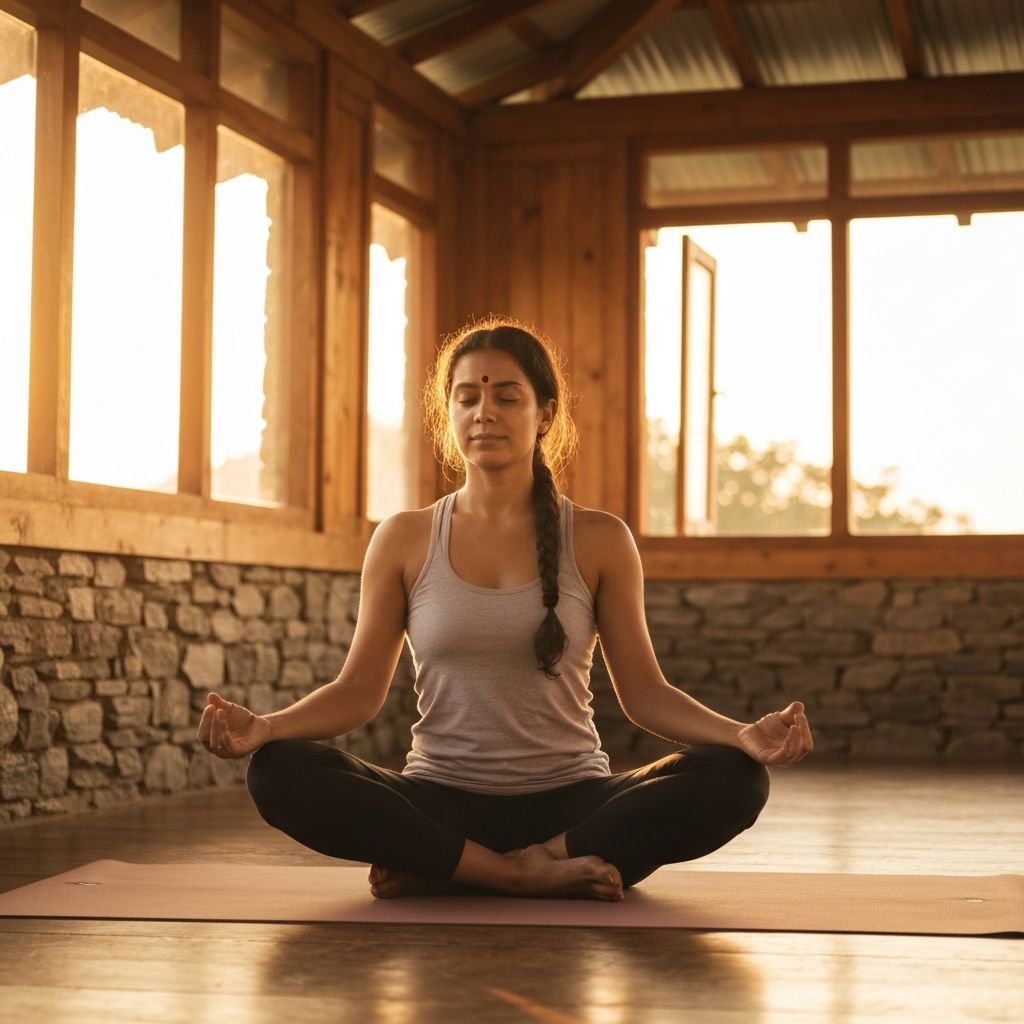
Hatha Yoga
The ancient science of physical discipline and breath control — the foundation of all modern yoga practices and the gateway to spiritual awakening.
Origin
Medieval India, c. 11th century CE
Key Text
Hatha Yoga Pradipika
Read Time
8 min read
When the word "yoga" is spoken today, most people imagine bodies bending into postures on rubber mats. This physical practice — the asanas, the breath work, the discipline of the body — traces its lineage to Hatha Yoga, a medieval Indian tradition that transformed yoga from a purely meditative discipline into a comprehensive science of the body as a vehicle for spiritual liberation.
The Meaning of Hatha
The word hatha is often translated as "forceful" or "willful," indicating the deliberate effort required in its practices. But a deeper interpretation breaks the word into ha (sun) and tha (moon), representing the union of opposing energies — the solar and lunar, the masculine and feminine, the active and receptive currents that flow through the subtle body.
Hatha Yoga thus aims at balance — the harmonisation of these dual forces through physical discipline, breath control, and internal purification. The body is not an obstacle to be transcended but a temple to be purified and mastered as the foundation for higher spiritual practices.
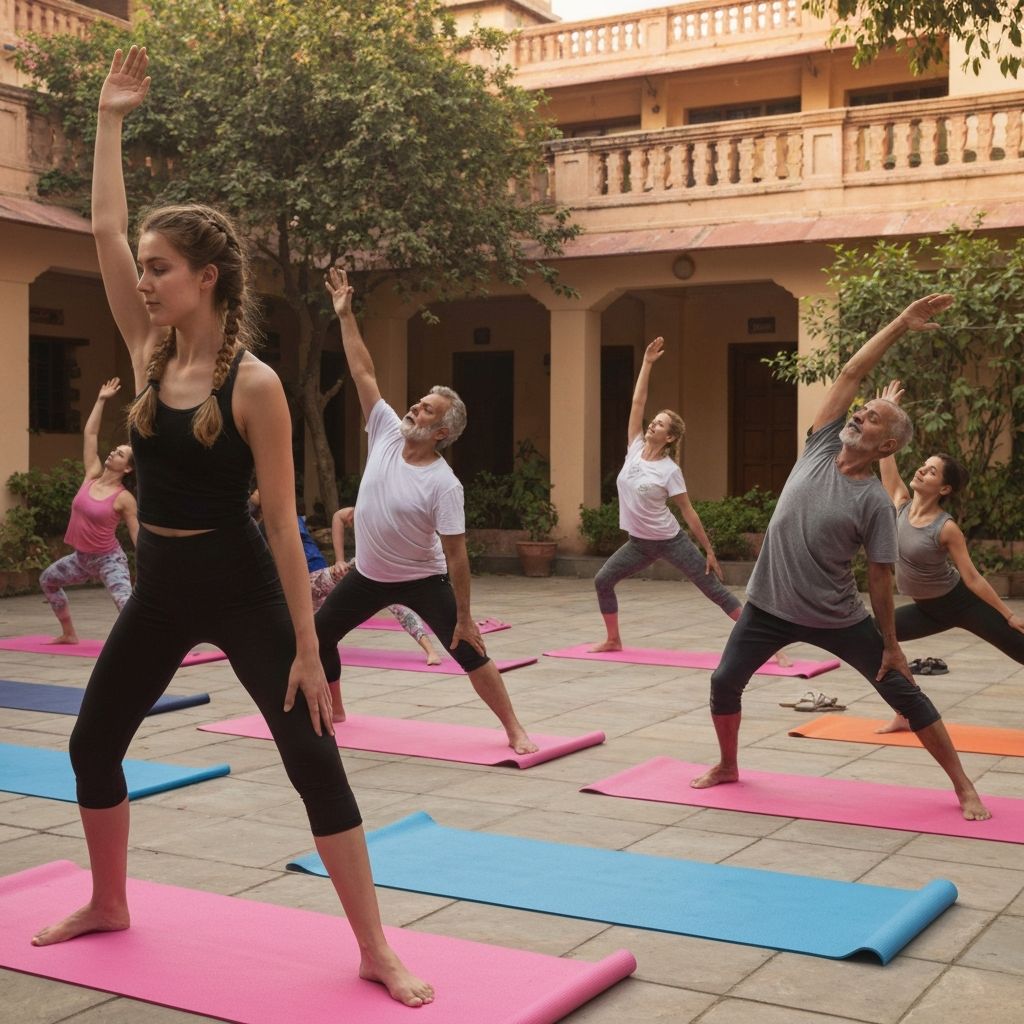
Classical Hatha Yoga postures as depicted in traditional manuscripts
The Classical Texts
Three texts form the canonical foundation of Hatha Yoga. The Hatha Yoga Pradipika, composed by Swami Swatmarama in the 15th century, is the most widely studied. It describes asanas, pranayama (breath control), mudras (energy seals), and bandhas (internal locks) in precise detail. The Gheranda Samhita and Shiva Samhita complement this with additional techniques and philosophical frameworks.
These texts make clear that physical postures were not ends in themselves. The Hatha Yoga Pradipika states explicitly that asana practice is the first step — meant to prepare the body for the rigours of pranayama, which in turn prepares the mind for meditation and samadhi. The goal was always liberation (moksha), not flexibility.
The Practices of Hatha Yoga
Classical Hatha Yoga encompasses far more than the asana classes familiar to modern practitioners. Its complete system includes:
The Six Limbs of Hatha Yoga
- Shatkarma: Six purification practices — including nasal cleansing (neti), abdominal churning (nauli), and colon cleansing (basti)
- Asana: Physical postures designed to purify the body, strengthen the spine, and prepare for seated meditation
- Pranayama: Breath control techniques to regulate prana (life force) and awaken kundalini energy
- Mudra: Energy seals using hand gestures, body positions, and eye movements to direct subtle energy
- Bandha: Internal locks (root, abdominal, throat) that contain and redirect prana within the body
- Samadhi: The final goal — absorption in pure awareness, achieved through mastery of all preceding practices
The Subtle Body
Central to Hatha Yoga is the concept of the subtle body — an energetic anatomy overlaying the physical. This includes the nadis (72,000 energy channels, of which ida, pingala, and sushumna are primary), the chakras (seven major energy centres along the spine), and kundalini (the dormant spiritual energy coiled at the base of the spine).
The ultimate aim of Hatha Yoga is to awaken kundalini and guide it upward through the sushumna nadi, piercing each chakra until it reaches the crown, where the practitioner experiences union with cosmic consciousness. This is not metaphor but a mapped interior geography, described with remarkable consistency across centuries of yogic literature.
"As long as the breath is restrained in the body, the mind is free from disturbance. As long as the gaze is fixed between the eyebrows, how can death approach?"
The Modern Revival
By the early 20th century, Hatha Yoga had declined in India, associated with ascetic extremes and viewed with suspicion by both colonial authorities and reform-minded Indians. Its revival owes much to teachers like T. Krishnamacharya in Mysore, whose students — B.K.S. Iyengar, Pattabhi Jois, Indra Devi — would carry yoga to the West.
Today, over 300 million people worldwide practise yoga, most of them some form of Hatha-derived asana practice. While much has been adapted and secularised, the classical texts remain available — inviting practitioners to look beyond the physical and discover the deeper purpose for which these practices were designed.
Hatha Yoga offers a complete science of transformation. Its message is both humble and radical: the body you inhabit, properly understood and disciplined, is itself the laboratory of liberation.