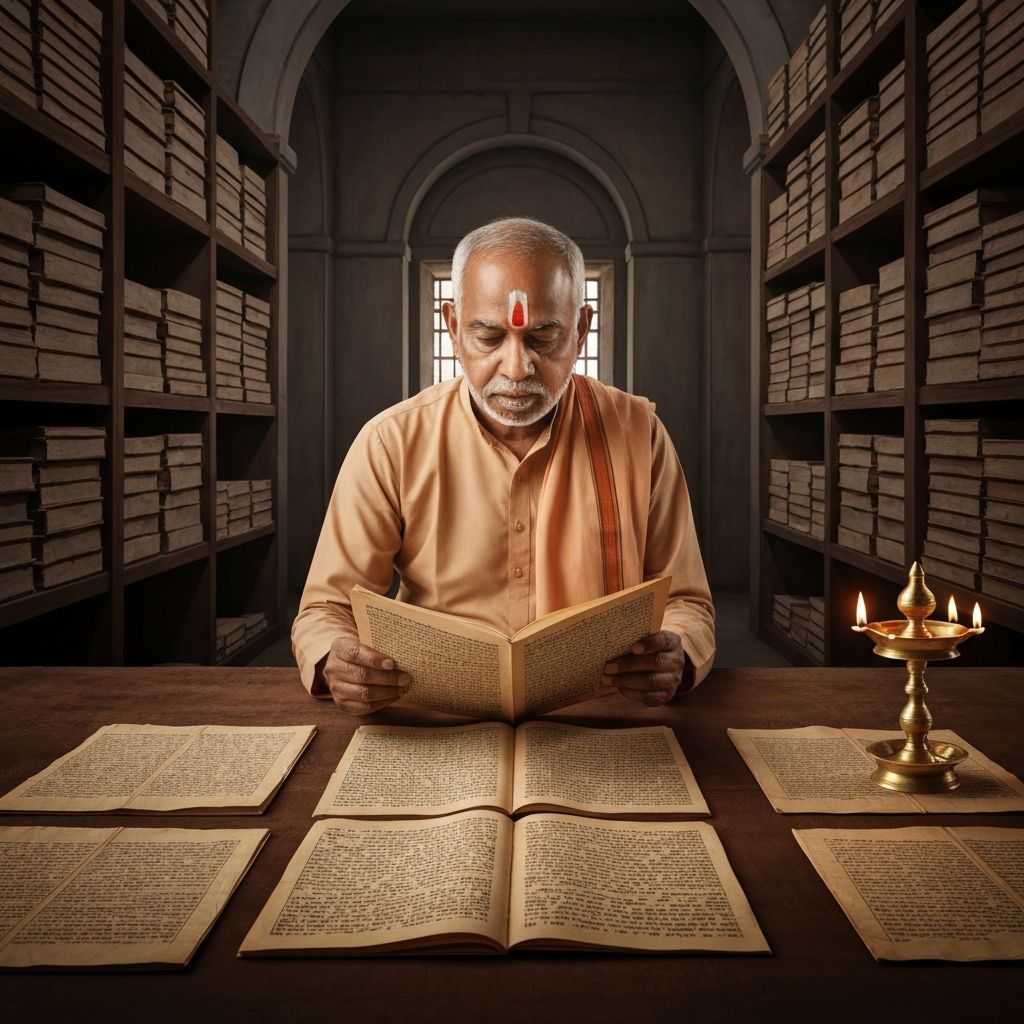
The Four Vedas
The oldest scriptures of humanity — a journey into the Rigveda, Samaveda, Yajurveda, and Atharvaveda, and what they reveal about the ancient Indian mind.
Composed
c. 1500–500 BCE
Language
Vedic Sanskrit
Read Time
8 min read
Before they were written down, they were breathed. Passed from teacher to student in an unbroken oral chain stretching back over three millennia, the Vedas represent not merely the oldest texts of India, but the oldest continuously preserved literature of any human civilization. To study them is to peer into the earliest moments of organised human thought about existence, meaning, and the divine.
What Are the Vedas?
The word Veda comes from the Sanskrit root vid — to know. The Vedas are thus "the books of knowledge," and the tradition holds them to be apaurusheya — not of human authorship, but revealed truths heard by ancient seers (rishis) in deep meditation. This is why they are also called Shruti — "that which is heard."
Each of the four Vedas is divided into four parts: the Samhitas (hymn collections), the Brahmanas (ritual explanations), the Aranyakas (forest texts on philosophical transition), and the Upanishads (the philosophical crown, exploring the nature of self and ultimate reality).
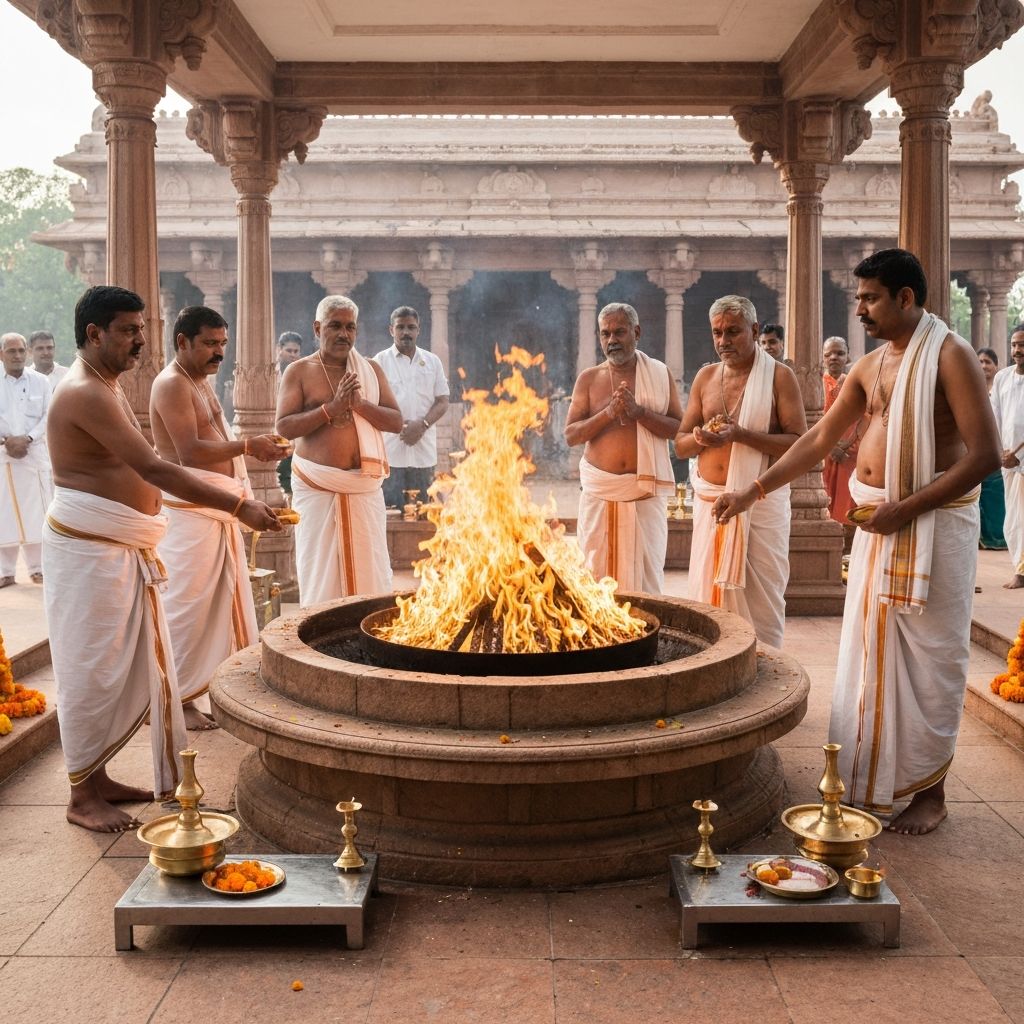
Vedic priests performing a yajna — a ritual fire ceremony — as described in the Yajurveda
The Four Vedas
Each Veda served a distinct function in the great machinery of Vedic ritual and knowledge — and each has left a distinct imprint on Indian civilisation.
Rigveda
Veda of Praise · 1,028 hymns
The oldest and most fundamental of the four, the Rigveda is a collection of hymns addressed to the Vedic deities — Agni, Indra, Varuna, and many others. Its language is archaic Sanskrit of extraordinary beauty, and its philosophy ranges from creation hymns to subtle meditations on the nature of existence.
Notable: The Nasadiya Sukta (Hymn of Creation) poses questions about the origin of the universe that remain philosophically unresolved to this day.
Samaveda
Veda of Melodies · 1,875 verses
Primarily derived from the Rigveda, the Samaveda is the liturgical text of the Udgatri priests. Its verses were set to elaborate musical notation — making it the world's oldest known musical text. The Samaveda gave birth to Indian classical music and its raga tradition.
Notable: Nearly 75 of its verses are unique; the rest are melodic arrangements of Rigvedic hymns meant for ritual chanting.
Yajurveda
Veda of Sacrifice · Two major recensions
The Yajurveda contains prose mantras and ritual instructions used by the Adhvaryu priest during the performance of Vedic yajnas (sacrificial rituals). It exists in two major forms — the Krishna (Black) Yajurveda, which mixes prose and verse, and the Shukla (White) Yajurveda, which is more organised.
Notable: The Shatarudriya, a powerful litany of a hundred names of Rudra (Shiva), is among the most chanted Vedic texts in Hindu worship today.
Atharvaveda
Veda of the Atharvan Priests · 730 hymns, 6,000 mantras
The youngest and most distinctive of the four, the Atharvaveda contains hymns for healing, protection, and domestic life. It preserves the earliest records of Indian medicine, magic, and popular religion — reflecting the beliefs and practices of ordinary people rather than only the priestly elite.
Notable: It contains the earliest hymns related to Ayurveda, the ancient Indian system of medicine, including references to specific plants and their healing properties.
The Oral Tradition: Memory as Sacred Duty
For over a thousand years before they were committed to writing, the Vedas were preserved entirely through oral transmission. Brahmin students underwent rigorous training — memorising not only the words but the precise pitch, duration, and tone of every syllable. Methods like pada-patha (word-by-word recitation), krama-patha (sequential), and ghana-patha (complex interweaving) ensured that even if a manuscript was destroyed, the text could be perfectly reconstructed from living memory.
UNESCO recognised this tradition in 2003, inscribing the "Tradition of Vedic Chanting" as an Intangible Cultural Heritage of Humanity. Today, Vedic pandits in Andhra Pradesh, Tamil Nadu, and Maharashtra still practise these ancient recitation methods — a living bridge across three and a half millennia.
"The Vedas are the source of all Dharma. They were seen by the great sages as the eternal truth breathing through the cosmos."
The Vedic Vision of the World
To read the Vedas is to encounter a civilisation that saw the cosmos as alive with intelligence — where fire, water, dawn, and storm were not merely physical phenomena but conscious presences capable of being addressed, praised, and asked for grace. The Vedic rishis were not naive animists; they were sophisticated thinkers who used the language of ritual and myth to point at realities they found beyond ordinary conceptual grasp.
The Rigveda's tenth and final mandala contains hymns of striking philosophical depth — the Purusha Sukta on cosmic consciousness, the Nasadiya Sukta on the mystery of creation, and the Hiranyagarbha Sukta on the golden womb at the beginning of existence. These texts crossed the boundary of ritual poetry into pure philosophical enquiry, planting the seeds that would flower into the Upanishads.
The Vedic Legacy in Modern India
- Ayurveda — the ancient system of medicine — traces its origins to the Atharvaveda
- Classical Indian music (Hindustani and Carnatic) evolved from Samavedic chanting traditions
- The Sanskrit language itself was refined and grammatically codified in the Vedic era by Panini
- The Upanishads, an integral part of the Vedic corpus, inspired global philosophy from Schopenhauer to Emerson
- Daily Hindu prayer still incorporates Vedic mantras like the Gayatri, composed over 3,500 years ago
The Vedas do not belong to a museum. They live in the sound of a morning prayer, in the structure of a Sanskrit verse, in the foundation of every significant strand of Indian philosophy and science. To encounter them — even briefly — is to hear a voice that has never ceased speaking, across thousands of years of human struggle, wonder, and seeking.