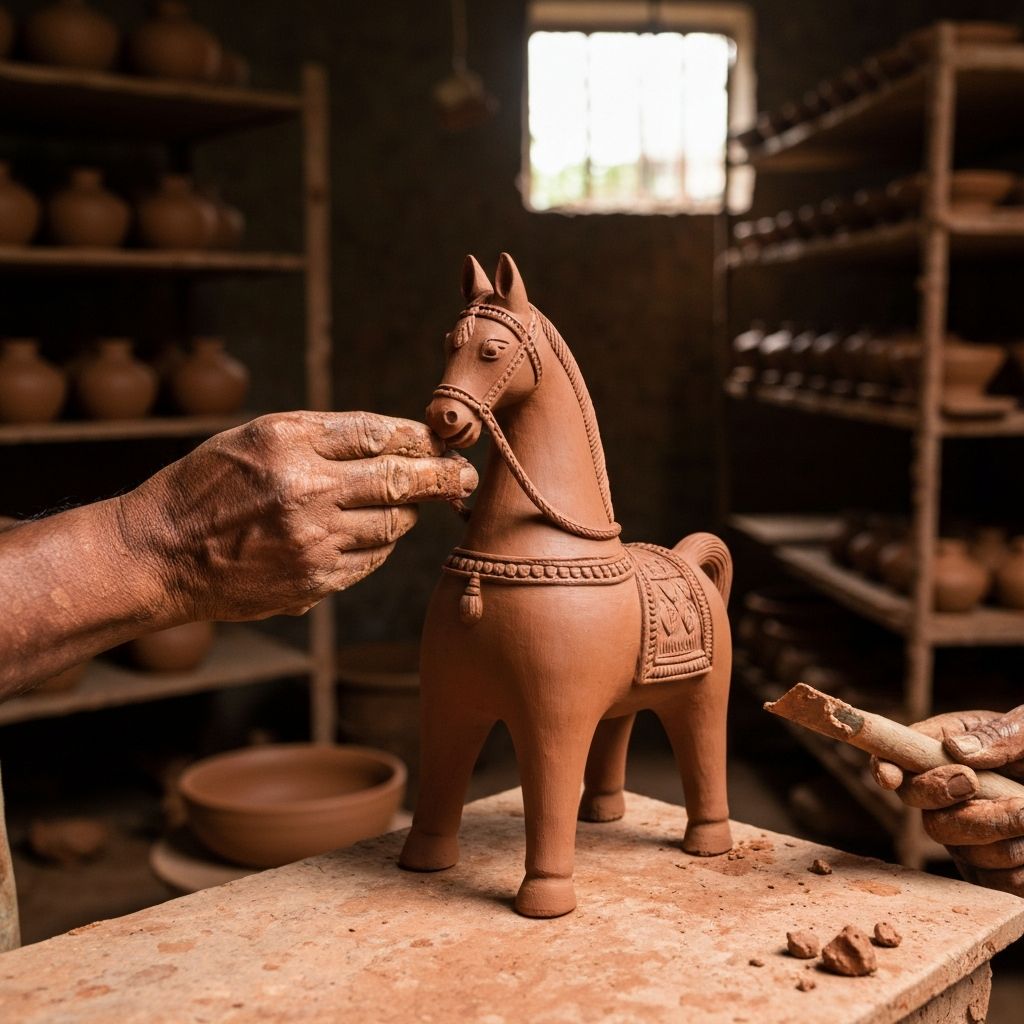
Terracotta
India's oldest craft tradition — from Indus Valley figurines to contemporary art, the story of clay shaped by five millennia of hands.
History
5,000+ Years
Regions
Pan-India
Material
Fired Clay
Recognition
GI Tagged
Terracotta — from the Latin "terra cocta" meaning "baked earth" — represents humanity's oldest engagement with fired clay. In India, this tradition stretches back to the Indus Valley Civilization, where archaeologists have unearthed thousands of terracotta figurines, seals, and vessels that speak to a sophisticated craft culture over 5,000 years old.
Today, terracotta thrives across India in remarkably diverse forms. From the iconic Bankura horses of Bengal to the votive plaques of Molela in Rajasthan, from the black-fired wares of Gorakhpur to the hyper-realistic figures of Krishnanagar, each region has developed its own distinctive style using local clays, firing techniques, and aesthetic traditions. This is not merely a surviving folk craft but a living, evolving art form.
Distinctive Features
Ancient Origin
Continuous tradition from the Indus Valley Civilization, over 5,000 years old
Local Clay
Each region uses distinctive local clay giving unique colors and textures
Hand-Built
Entirely handcrafted using traditional techniques passed through generations
GI Protected
Several terracotta traditions hold Geographical Indication tags
Major Terracotta Traditions
Bankura Horse
The iconic terracotta horses of Bankura are among India's most recognizable folk art objects. Originally created as votive offerings to the deity Dharma Thakur, these elongated, stylized horses have become symbols of Bengal's craft heritage.
Molela Plaques
Village artisans in Molela create large terracotta plaques depicting local deities and folk heroes. These are worshipped in rural shrines across Rajasthan, Gujarat, and Madhya Pradesh as sacred images.
Gorakhpur Terracotta
Known for its distinctive black and red finish, Gorakhpur terracotta features elaborate human and animal figurines, often depicting elephants, horses, and scenes from rural life.
Krishnanagar Terracotta
Famous for its lifelike sculptures, Krishnanagar artisans create remarkably realistic human figures depicting occupations, ceremonies, and daily life in Bengal.