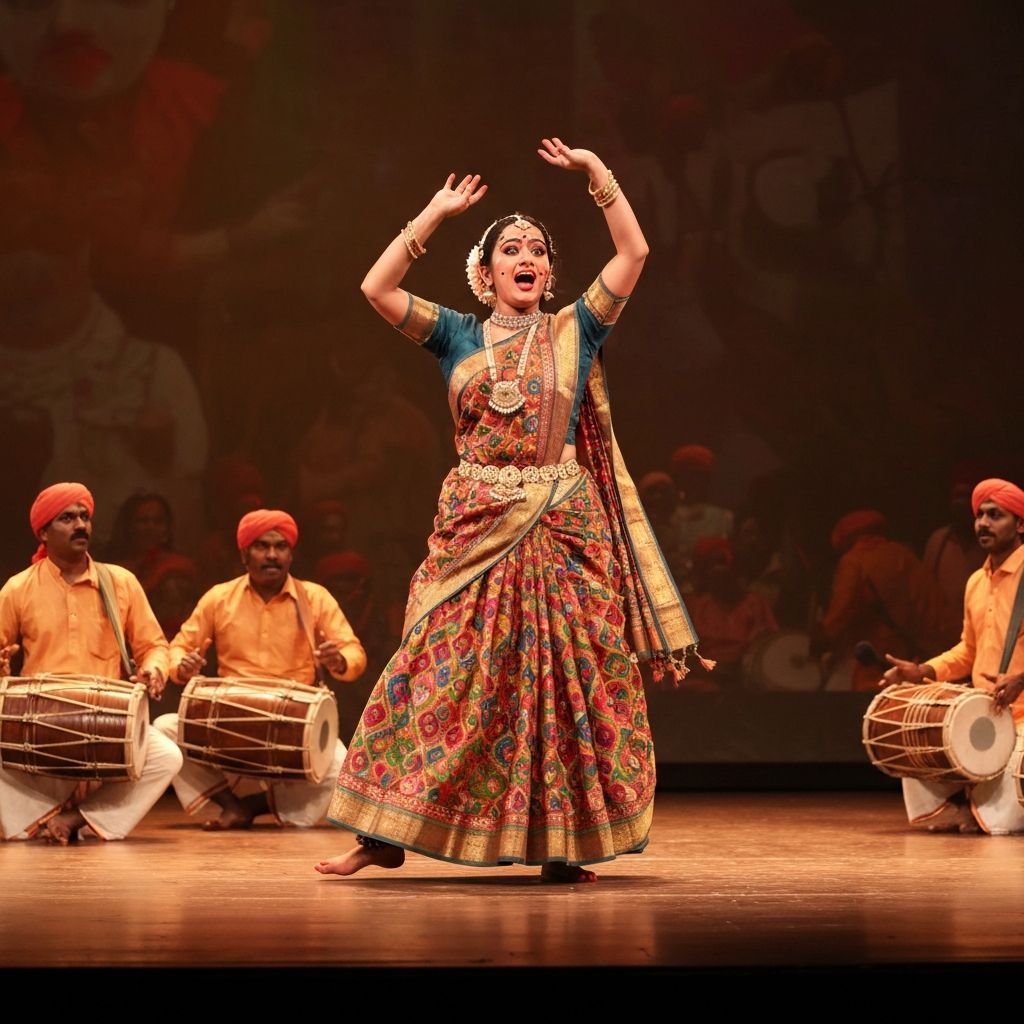
Tamasha
Maharashtra's vibrant folk theatre tradition combining song, dance, drama and powerful social commentary.
Origin
Maharashtra
Period
16th Century onwards
Key Element
Lavani Dance
Community
Kolhati & Mahar
Tamasha is Maharashtra's most popular folk theatre form, known for its energetic performances, witty social commentary, and the mesmerizing Lavani dance. The word "Tamasha" comes from the Urdu word meaning "fun" or "entertainment," and the art form truly lives up to its name with vibrant, engaging performances that have entertained audiences for over four centuries.
Originating in the 16th century during the Maratha period, Tamasha evolved from the devotional songs of the Bhakti movement and the heroic ballads (Powada) celebrating Maratha warriors. Over time, it developed into a complete theatrical form incorporating dance, drama, music, and social satire.
Key Components of Tamasha
Lavani Dance
Energetic, expressive dance form with powerful rhythmic movements
Dholki Music
Traditional percussion accompaniment driving the performance
Vag Natya
Dramatic skits with social commentary and satire
Powada
Heroic ballads celebrating Maratha warriors and history
Distinctive Features
Performed in open-air venues and theatre halls
Combines classical and folk elements
Strong tradition of female lead performers
Social commentary through humor and satire
Traditional Dholki-Tasha percussion ensemble
Stories from mythology and contemporary life