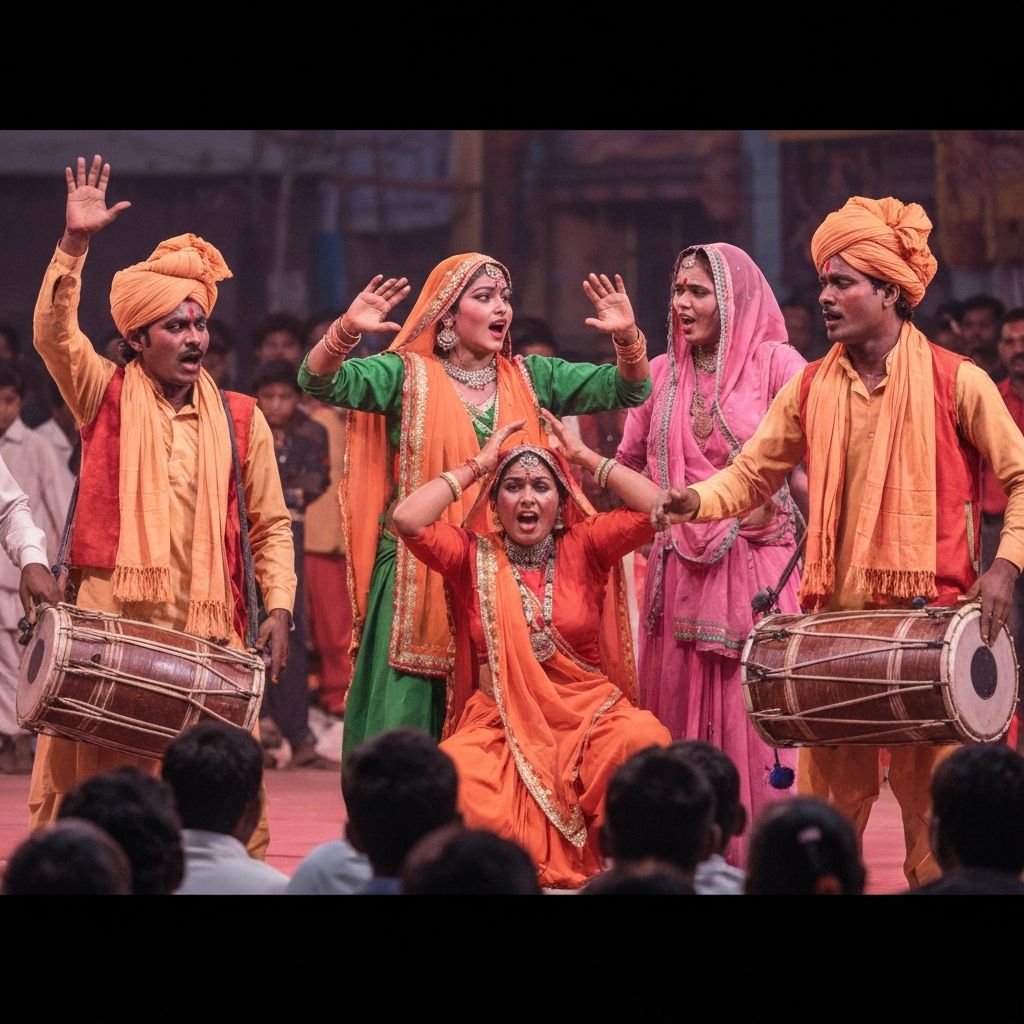
Nautanki
North India's operatic folk theatre tradition celebrating legendary lovers and brave folk heroes.
Origin
UP & Rajasthan
Period
18th Century onwards
Key Element
Operatic Singing
Styles
Hathras & Kanpur
Nautanki is the most popular form of folk opera in North India, named after Princess Nautanki whose love story became one of its most performed tales. This vibrant theatrical tradition combines singing, dialogue, and dance to tell stories of legendary lovers, brave warriors, and local folk heroes.
The distinctive operatic singing style, with its high-pitched melodious phrases accompanied by the thundering nagara drums, creates an unforgettable theatrical experience. Nautanki has two main styles — the Hathras style with its refined musical approach and the Kanpur style known for its robust, earthy performances.
Key Components of Nautanki
Operatic Singing
Distinctive high-pitched singing style with elaborate musical phrases
Nagara Drums
Large kettledrums that drive the rhythm and announce performances
Romantic Tales
Stories of legendary lovers like Laila-Majnu and Shirin-Farhad
Folk Heroes
Ballads celebrating brave figures like Sultana Daku and Amar Singh
Distinctive Features
Open-air performances in village squares
Distinctive operatic singing style
Stories from Persian and Indian folklore
All-male troupes traditionally
Elaborate makeup and colorful costumes
Interactive audience participation