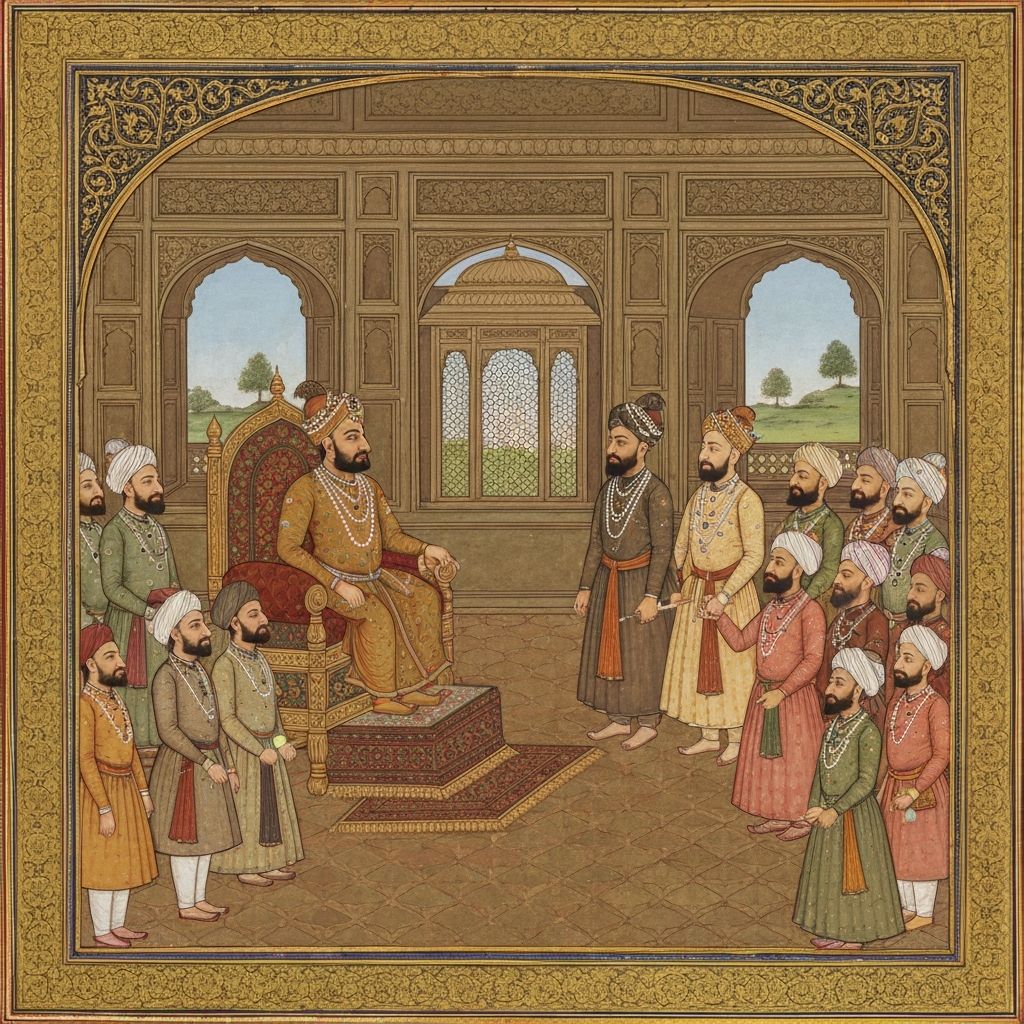
Mughal School
The imperial vision that transformed Indian painting
Centers
Delhi, Agra, Lahore
Period
1526-1857
Style
Persian-Indian
Patrons
Mughal Emperors
The Imperial Atelier
The Mughal School of painting represents one of the most significant artistic achievements in Indian history. Emerging under Emperor Akbar in the mid-16th century, it brought together Persian master artists with indigenous Indian painters, creating a revolutionary synthesis that would influence art across the subcontinent.
The imperial karkhana (workshop) employed hundreds of artists working collaboratively on manuscripts and albums. This systematic approach, combined with generous patronage, elevated painting to unprecedented heights of technical excellence and artistic innovation.
From historical chronicles like the Akbarnama to nature studies under Jahangir, Mughal paintings documented court life, celebrated nature, and recorded history with remarkable precision and beauty.
Distinctive Characteristics
Realistic Portraiture
Lifelike depictions with individual features and expressions
Naturalistic Landscapes
Detailed flora, fauna, and atmospheric perspective
Persian-Indian Fusion
Blend of Persian refinement with Indian vibrancy
Intricate Borders
Elaborate gold and floral margin decorations
Imperial Patronage
Akbar (1556-1605)
Founded imperial atelier, encouraged Hindu-Muslim synthesis
Jahangir (1605-1627)
Nature studies, portraiture, refined aesthetics
Shah Jahan (1628-1658)
Romantic themes, jewel-like precision
Aurangzeb (1658-1707)
Decline of patronage, dispersal of artists