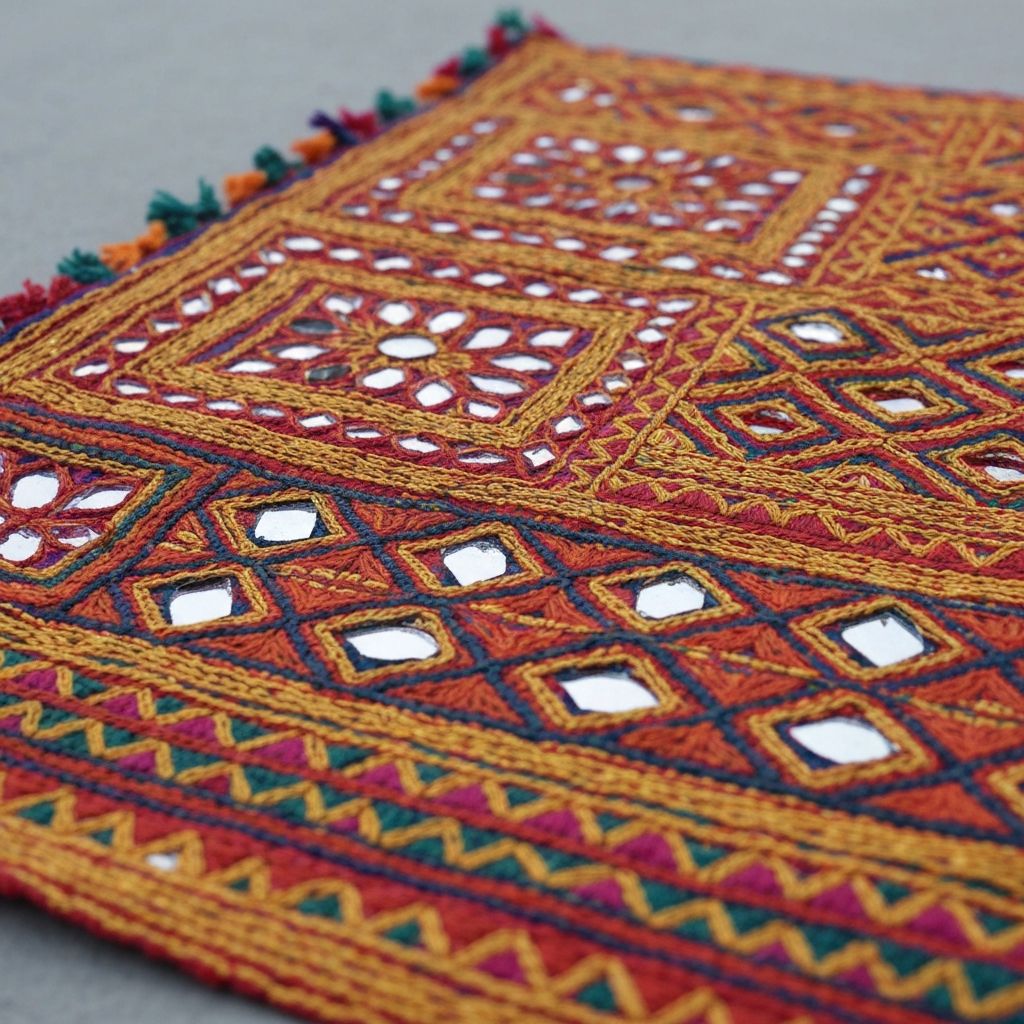
Kutchi Embroidery
Where mirrors catch the desert sun — the sparkling geometric embroidery of Gujarat's nomadic communities.
Origin
Kutch, Gujarat
History
400+ Years
Technique
Mirror Work & Embroidery
Recognition
GI Tagged
In the stark, sun-bleached landscape of Kutch — one of the largest salt deserts in the world — communities have created one of India's most exuberant textile traditions. Kutchi embroidery, with its dazzling mirrors, bold colors, and dense geometric patterns, transforms simple cloth into celebrations of light and movement.
The tradition is deeply tied to the nomadic and pastoral communities of the region: Rabari herders, Ahir cattle breeders, Mutwa Muslims, and others. Each community has developed distinctive styles — their embroidery serves as identity markers, instantly recognizable to those who know the visual language. A woman's skill at embroidery traditionally determined her social standing and marriage prospects.
The mirrors in Kutchi embroidery, called 'abhla' or 'shisha', serve both decorative and spiritual purposes. They're believed to deflect the evil eye and bring good fortune. In the harsh desert light, they create a dazzling effect, transforming the wearer into a walking constellation of reflected sunlight.
Distinctive Features
Mirror Work (Shisha)
Tiny mirrors stitched into fabric creating sparkle
Geometric Patterns
Angular, precise designs reflecting desert landscape
Vibrant Colors
Bold reds, oranges, yellows against dark backgrounds
Dense Stitching
Little base fabric visible, heavily embroidered
Community Identity
Each community has distinctive patterns and colors
Dowry Tradition
Girls embroider items for their marriage trousseau
Embroidery by Community
Rabari
Bold geometric mirrors, primarily on dark backgrounds
Ahir
Dense embroidery covering entire fabric, intricate patterns
Mutwa
Finest chain stitch work, often with black base
Jat
Large motifs, generous use of mirrors and bold colors
Sodha
Characterized by white embroidery on red fabric
Traditional Stitches
Caring for Kutchi Work
- Dry clean recommended to protect mirrors and stitching
- If hand washing, use cold water and very mild detergent
- Never wring — this can dislodge mirrors and distort embroidery
- Dry flat in shade, away from direct sunlight
- Store flat with acid-free tissue to prevent creasing
- Handle with care — mirrors can have sharp edges