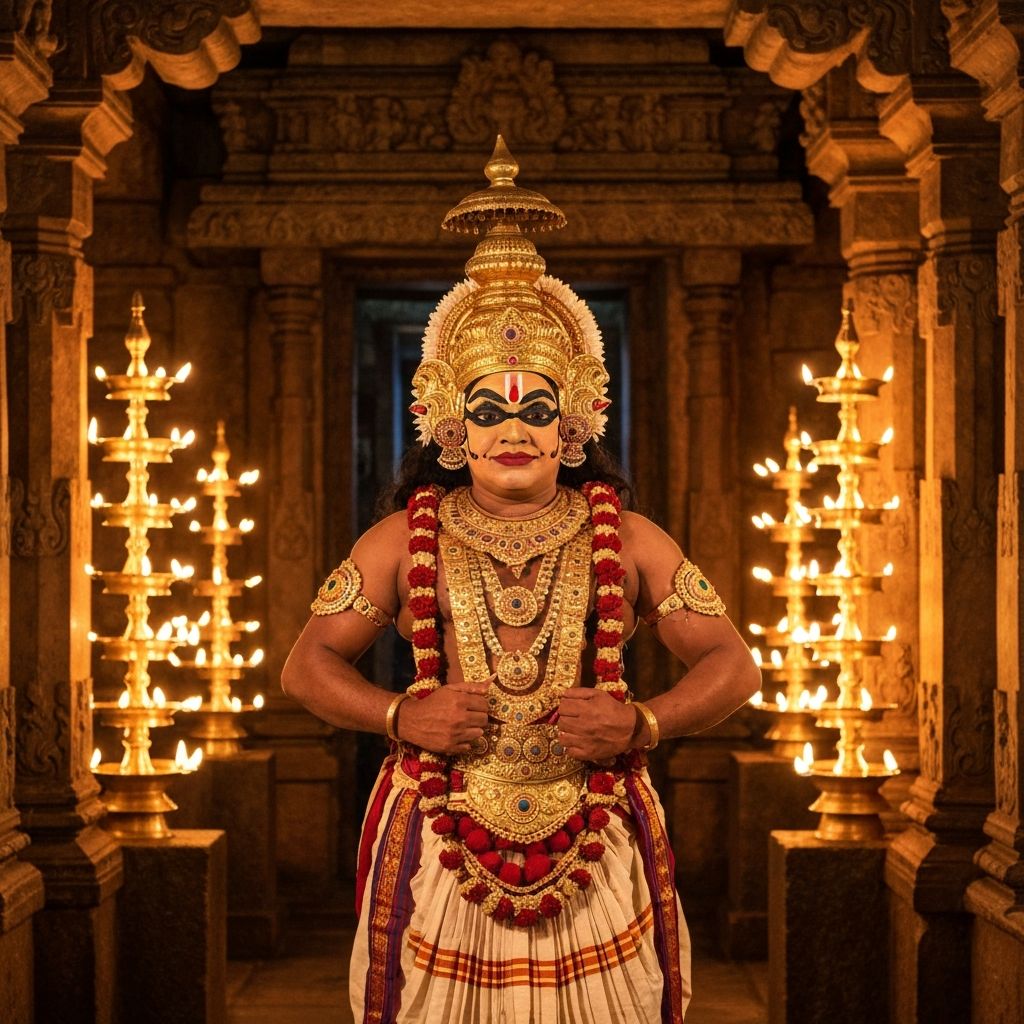
Koodiyattam
The world's oldest surviving form of Sanskrit theatre, preserved for over 2000 years.
Origin
Kerala
Period
2000+ Years
Language
Sanskrit
UNESCO
2001 Heritage
Koodiyattam is the world's oldest continuously performed theatre tradition, recognized by UNESCO in 2001 as a "Masterpiece of the Oral and Intangible Heritage of Humanity." This ancient art form has preserved the performance traditions of classical Sanskrit drama for over 2000 years in the temple theatres of Kerala.
Performed exclusively by the Chakyar community (male performers) and Nangiars (female performers), Koodiyattam is distinguished by its elaborate use of facial expressions and hand gestures to communicate complex emotions and narratives. A single act of a Sanskrit play can be expanded into days of performance through detailed elaboration.
Key Components of Koodiyattam
Sanskrit Drama
Performances of classical Sanskrit plays by Bhasa and Kalidasa
Koothambalam
Specially built temple theatre halls for performances
Facial Expressions
Elaborate use of eyes and facial muscles for communication
Mizhavu Drums
Large copper drums providing rhythmic accompaniment
Distinctive Features
UNESCO Intangible Cultural Heritage (2001)
Performed in special temple theatres
Performances can span multiple days
Elaborate makeup and costumes
Chakyar and Nangiar performers
Preserved through oral tradition for 2000 years