Kishangarh School
The epitome of romantic idealism in Indian painting
Center
Kishangarh, Rajasthan
Golden Period
1735-1770
Master Artist
Nihal Chand
Icon
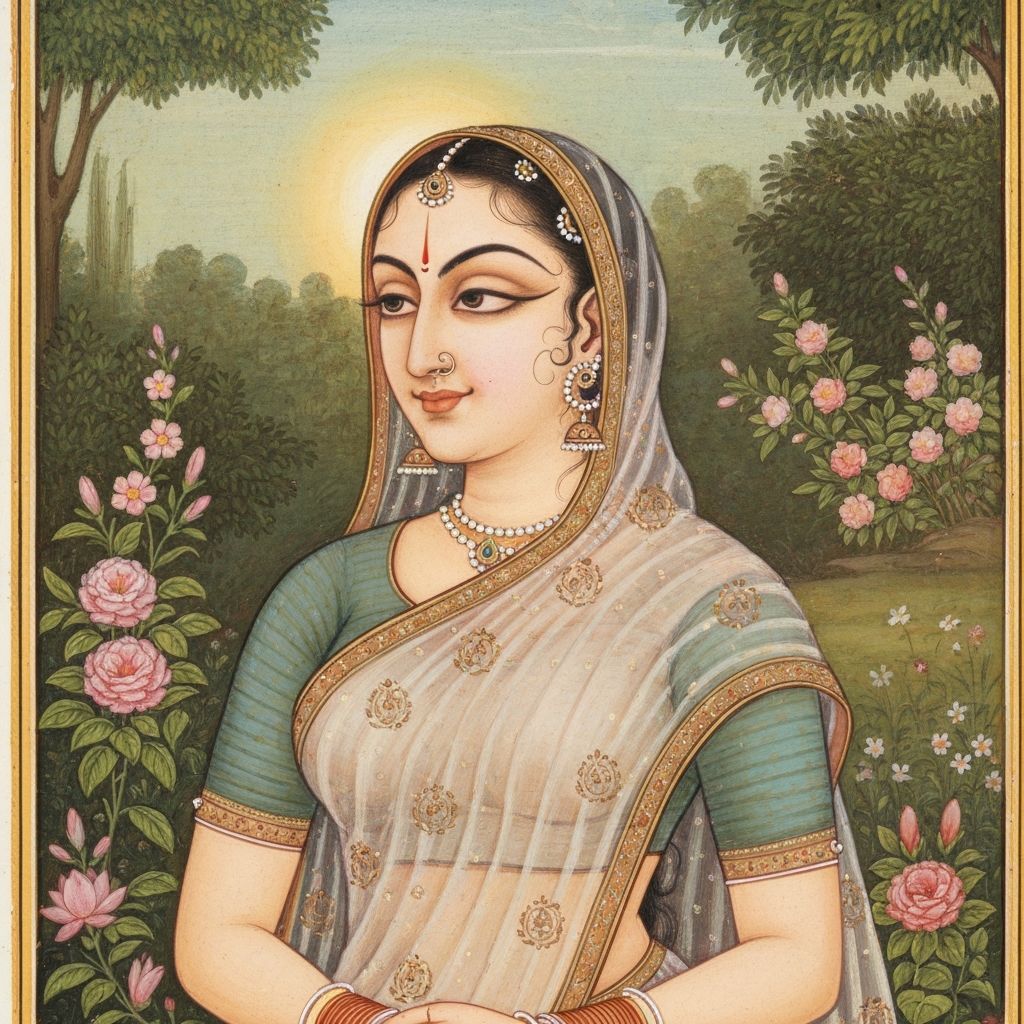
Bani Thani
The Mona Lisa of India
The Kishangarh School represents the pinnacle of romantic idealism in Indian miniature painting. Under the patronage of Raja Sawant Singh (1748-1764), a poet-king who wrote under the pen name Nagari Das, this small Rajput state produced some of the most exquisite paintings in Indian art history.
The school's most celebrated creation is the portrait of Bani Thani, often called the "Mona Lisa of India." This idealized image, believed to be based on the poet-singer who was Sawant Singh's beloved, established a distinctive aesthetic of elongated features and sublime beauty.
The master artist Nihal Chand worked closely with Raja Sawant Singh to visualize the romantic poetry celebrating divine love through the metaphor of Radha and Krishna. The result was a unique synthesis of poetry and painting that captures the essence of spiritual devotion.
Distinctive Characteristics
Elongated Features
Distinctive arched eyebrows, lotus-petal eyes, and pointed chin
Romantic Poetry
Paintings inspired by devotional poetry and love themes
Refined Elegance
Aristocratic beauty with exquisite attention to costume
Devotional Fervor
Krishna-Radha themes imbued with spiritual longing
The Bani Thani Ideal
The distinctive facial features that define the Kishangarh style: