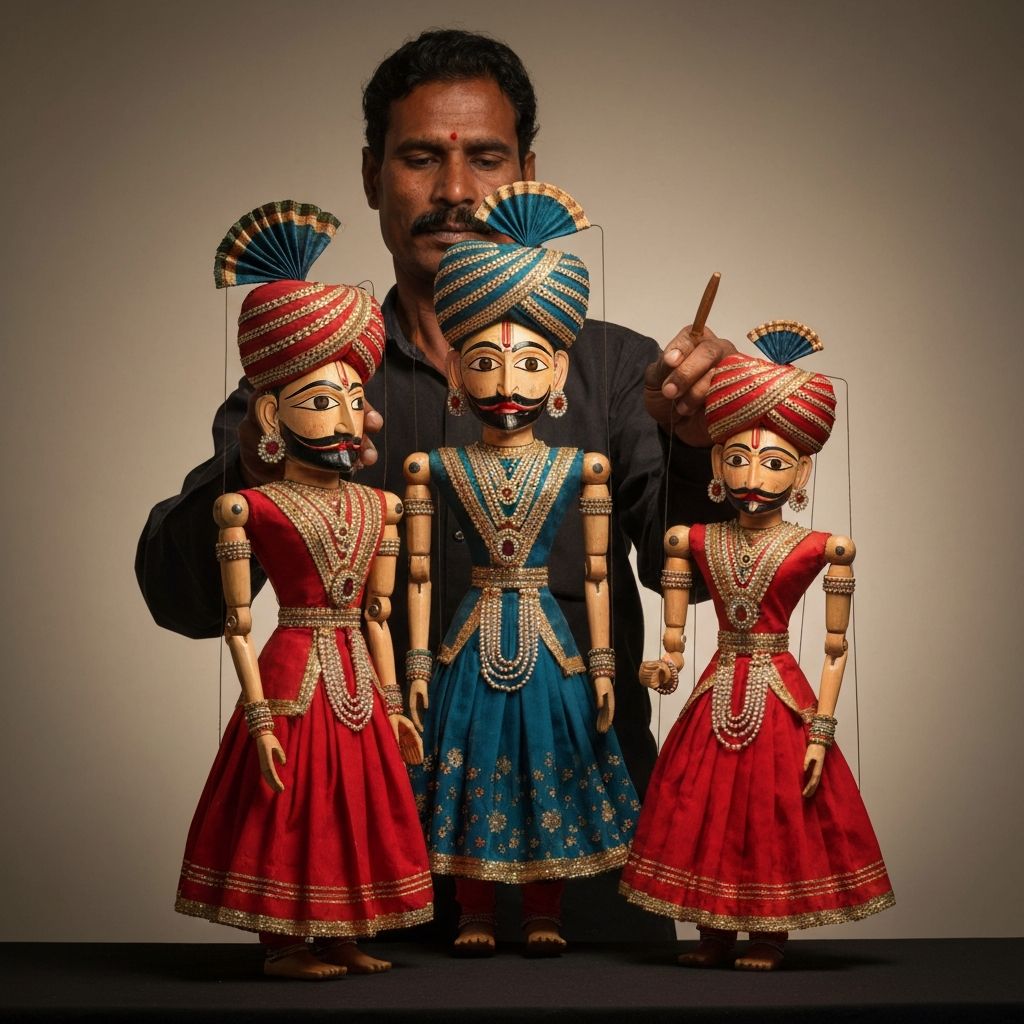
Kathputli
Rajasthan's iconic string puppet tradition bringing folk heroes, royalty, and mythology to life through colorful wooden marionettes.
Origin
Rajasthan
History
1000+ Years
Performers
Bhat Community
Recognition
GI Tag Pending
Kathputli (from "kath" meaning wood and "putli" meaning doll) is one of India's oldest and most beloved puppet traditions. Originating in Rajasthan over a thousand years ago, these colorful string puppets have entertained royalty and commoners alike, traveling across the desert landscape with stories of love, valor, and divine intervention.
The puppets are traditionally made by the Bhat community, a semi-nomadic group who have preserved this art form for generations. Each puppet is carved from mango or neem wood for the head and hands, with a cotton-stuffed body dressed in elaborate Rajasthani attire featuring mirror work, embroidery, and bright colors. Unlike Western marionettes that use multiple strings, Kathputli puppets are controlled primarily by a single string attached to the head, requiring extraordinary skill from the puppeteer.
Distinctive Features
String Control
Puppets controlled by a single string attached to the head
Wooden Puppets
Carved from mango or neem wood with cotton-stuffed bodies
Vibrant Costumes
Colorful Rajasthani attire with mirror work and embroidery
Traveling Tradition
Performed by nomadic Bhat community across Rajasthan