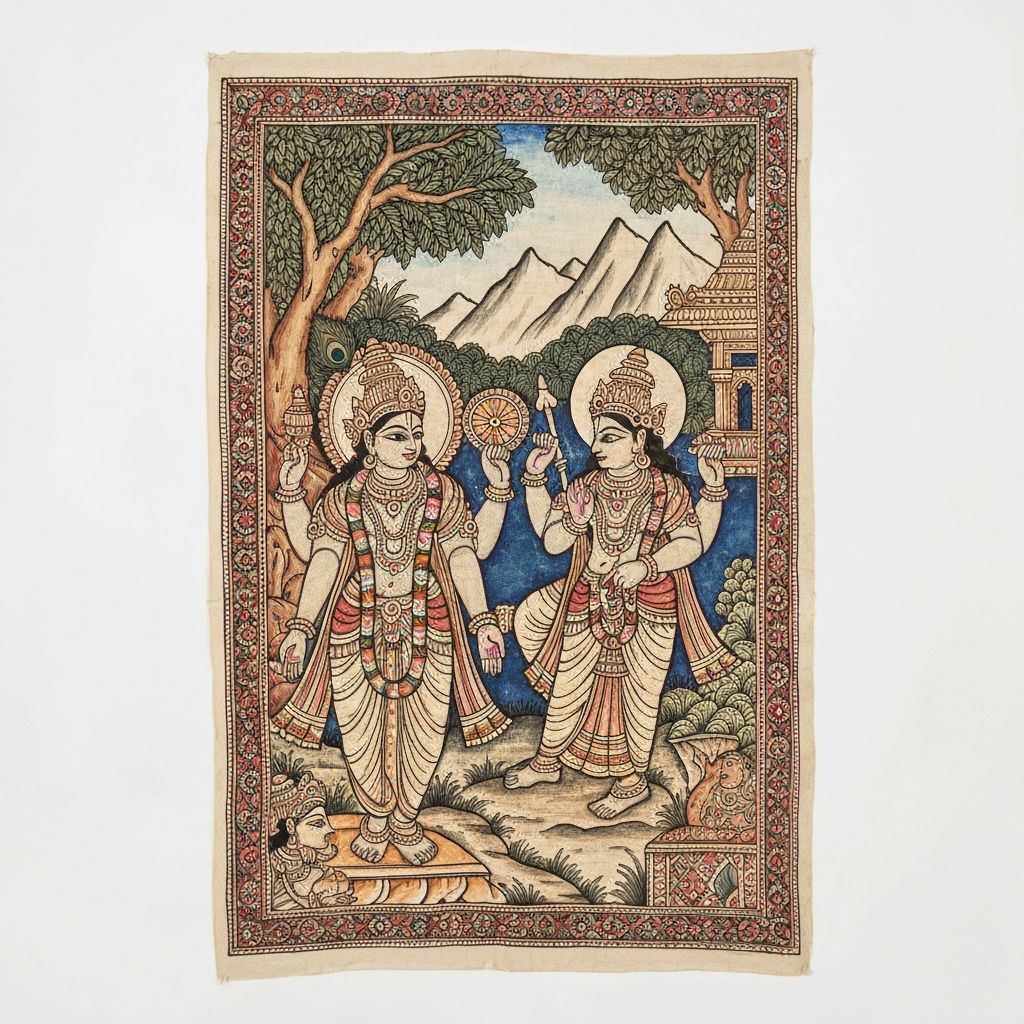
Kalamkari
Stories told with a pen — where ancient myths are painted onto cloth with natural dyes in a 3,000-year-old tradition.
Origin
Andhra Pradesh & Telangana
History
3000+ Years
Technique
Hand-Painting & Block
Recognition
GI Tagged
Kalamkari — literally "pen work" — is one of the oldest and most laborious textile arts in the world. Using a bamboo or date palm pen (kalam) dipped in natural dyes, artisans paint intricate mythological scenes onto cotton cloth. The tradition evolved to create temple hangings that illustrated sacred stories for devotees, transforming epic narratives into visual spectacles.
The process is extraordinarily complex, involving up to 23 distinct steps. Fabric must be prepared through multiple rounds of washing and mordanting to accept the natural dyes. Each color requires a different mordant, and the sequence of application follows a precise logic developed over millennia. A single piece can take weeks to complete.
Two distinct styles exist: Srikalahasti Kalamkari, entirely hand-drawn with the pen, is the older and more laborious tradition. Machilipatnam Kalamkari uses carved wooden blocks for faster production. Both employ only natural dyes — indigo for blue, madder and alum for reds and blacks, myrobalan for yellows. No synthetic colors are used in authentic Kalamkari.
Distinctive Features
Hand-Drawn Art
Each line drawn with bamboo pen (kalam) dipped in dye
Vegetable Dyes
All colors extracted from plants, bark, and minerals
Mythological Themes
Stories from Ramayana, Mahabharata, and Puranas
23-Step Process
Multiple stages of washing, mordanting, and dyeing
Temple Traditions
Evolved to create hangings for temple rituals
Natural Materials
Cotton, tamarind, myrobalan, and iron all locally sourced
Kalamkari Styles
Srikalahasti
Pen-drawn (kalam) freehand style, typically black and red on off-white
Machilipatnam
Block-printed style, faster production with carved wooden blocks
Pedana
Vegetable dyed, known for softer color palettes
Temple Hangings
Large narrative scrolls depicting deity processions
Yardage
Continuous fabric for modern garments and home textiles
Traditional Motifs
Caring for Kalamkari
- First wash separately in cold salt water to set dyes
- Always hand wash with mild detergent, never bleach
- Natural dyes may release color initially — wash separately
- Dry flat in complete shade, never in direct sun
- Iron on reverse side while slightly damp
- Store flat or rolled, away from moisture