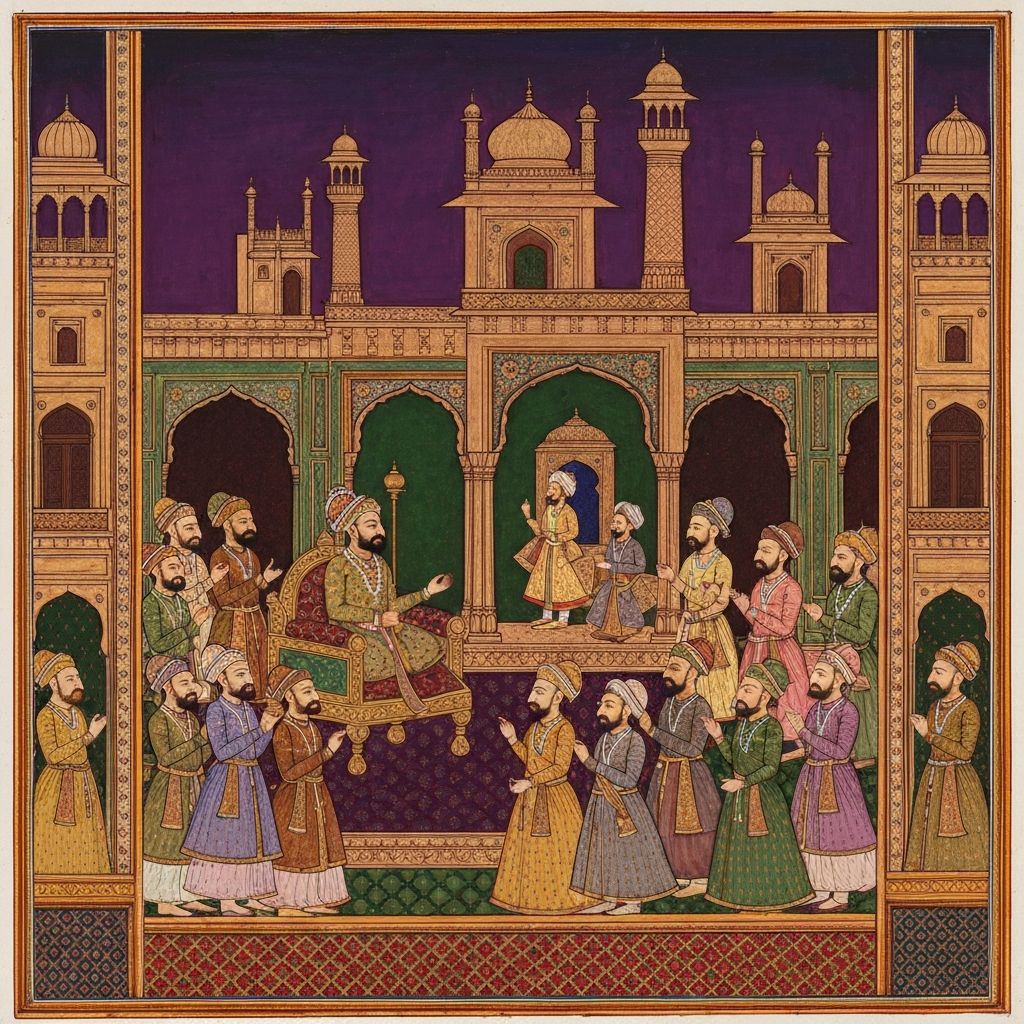
Deccan School
The jewel-toned splendor of the Southern sultanates — where Persian elegance met Indian richness
Period
15th – 17th Century
Origin
Bijapur, Golconda, Ahmadnagar
Style
Persian-Indian Fusion
Palette
Rich Jewel Tones
The Deccan School flourished in the sultanates of Southern India — Bijapur, Golconda, and Ahmadnagar — from the late 15th to the late 17th century. Unlike the Mughal tradition to the north, Deccani painting developed its own distinctive aesthetic, blending Persian elegance with Turkish influences and local South Indian elements.
These courts attracted artists from Persia, Turkey, and across India, creating a cosmopolitan artistic milieu. The result was a style marked by rich jewel-toned backgrounds, bold outlines, and a sensual elegance quite different from Mughal naturalism.
Key Characteristics
Persian-Indian Fusion
Unique blend of Persian refinement, Turkish influences, and South Indian elements, creating a distinctive Deccani aesthetic.
Rich Jewel Tones
Deep purples, greens, golds, and crimsons create opulent backgrounds and luxurious costumes.
Bold Outlines
Strong, confident outlines define figures and architectural elements, giving paintings a graphic quality.
European Influences
Due to Portuguese trade contacts, some Deccani paintings show European perspective and chiaroscuro techniques.
The Deccan Sultanates
Bijapur
1490–1686The most prolific Deccani center. Known for portraits of rulers, music and dance scenes, and romantic subjects.
Golconda
1518–1687Produced elegant court scenes and portraits. Famous for the Ragamala paintings and depicting yogis and dervishes.
Ahmadnagar
1490–1636Early Deccani center with distinctive style. The Tarif-i-Hussain Shahi manuscript is a major achievement.