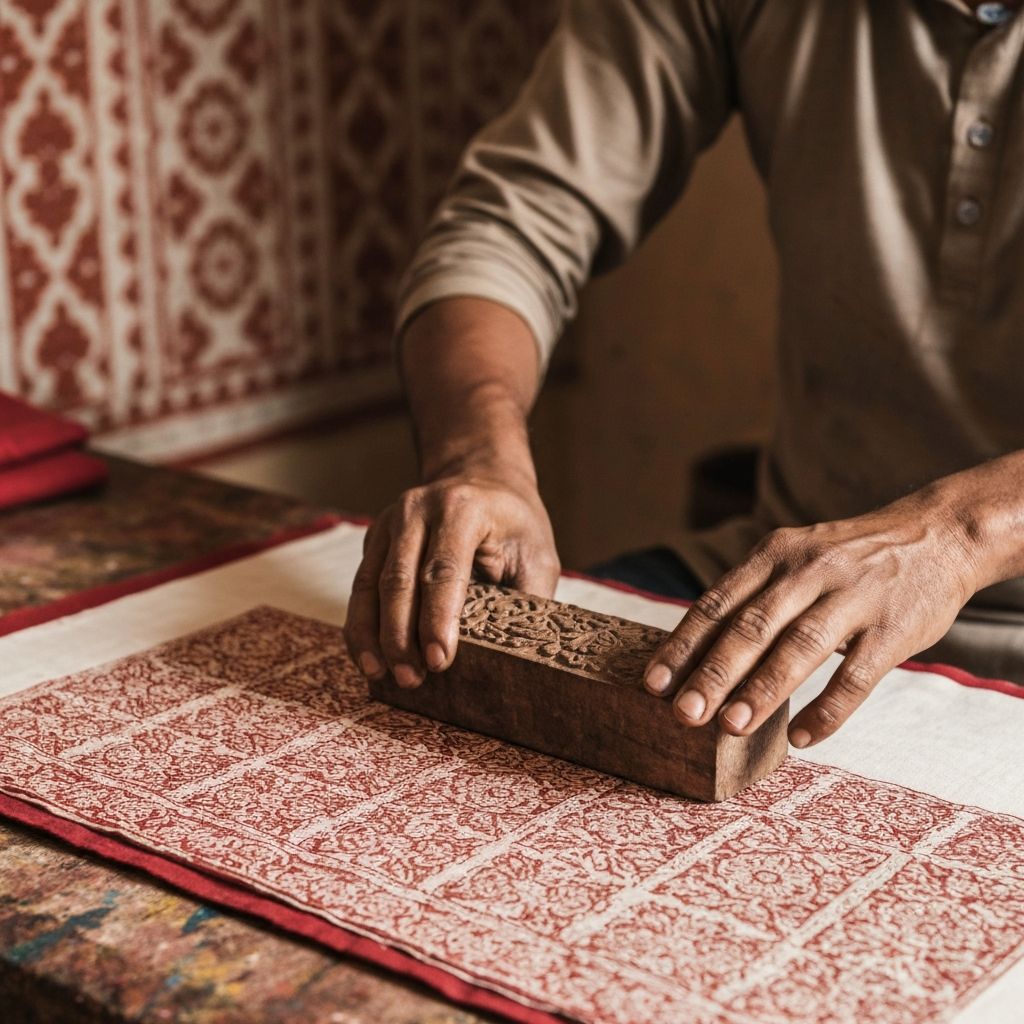
Block Printing
Carved in wood, pressed by hand — the ancient rhythm of stamp and lift that creates India's iconic printed textiles.
Centers
Rajasthan, Gujarat, MP
History
2000+ Years
Technique
Woodblock Stamping
Recognition
Multiple GI Tags
In the dusty workshops of Jaipur and Bagru, a sound repeats endlessly: the soft thud of wooden blocks pressing against cloth. Block printing — one of the oldest methods of textile decoration — has been practiced in India for over two millennia. What looks simple is actually extraordinarily complex: each print requires perfect pressure, precise alignment, and an intuitive understanding of how dyes interact with fabric.
The blocks themselves are works of art. Carved by specialized craftsmen from dense teak or sheesham wood, they can take days to complete. A single design might require multiple blocks: one for each color, one for outlines, another for fill patterns. The printer must keep all these in mind while working at remarkable speed, stamping thousands of impressions per day.
Different regions have developed distinctive styles. Sanganer, near Jaipur, is known for delicate florals on white backgrounds. Bagru specializes in bold geometrics using traditional mud-resist techniques. Bagh in Madhya Pradesh creates intricate patterns in natural red and black. Each tradition reflects local tastes, available materials, and centuries of aesthetic refinement.
Distinctive Features
Hand-Carved Blocks
Intricate designs carved into teak or sheesham wood
Natural Dyes
Colors from indigo, madder, pomegranate, and more
Precise Repetition
Perfect alignment achieved through skilled hand-eye coordination
Layered Printing
Multiple blocks for different colors and details
Breathing Fabric
Natural dyes allow fabric to remain soft and airy
Regional Styles
Distinct aesthetics from Jaipur, Bagru, Sanganer, and more
Printing Styles
Sanganeri
Delicate floral prints on white backgrounds, fine detail work
Bagru
Bold geometric patterns, mud-resist technique, earthy tones
Dabu
Mud-resist printing creating distinctive resist patterns
Syahi-Begar
Black and alum printing without indigo, subtle elegance
Ajrakh
Complex geometric patterns using indigo and madder
Bagh
Geometric and floral prints from Madhya Pradesh
Traditional Motifs
Caring for Block Prints
- First wash separately in cold water to remove excess dye
- Natural dyes may bleed slightly in initial washes — this is normal
- Hand wash or use gentle machine cycle with mild detergent
- Dry in shade to preserve color vibrancy
- Iron while slightly damp on reverse side
- Colors will soften beautifully with age and washing