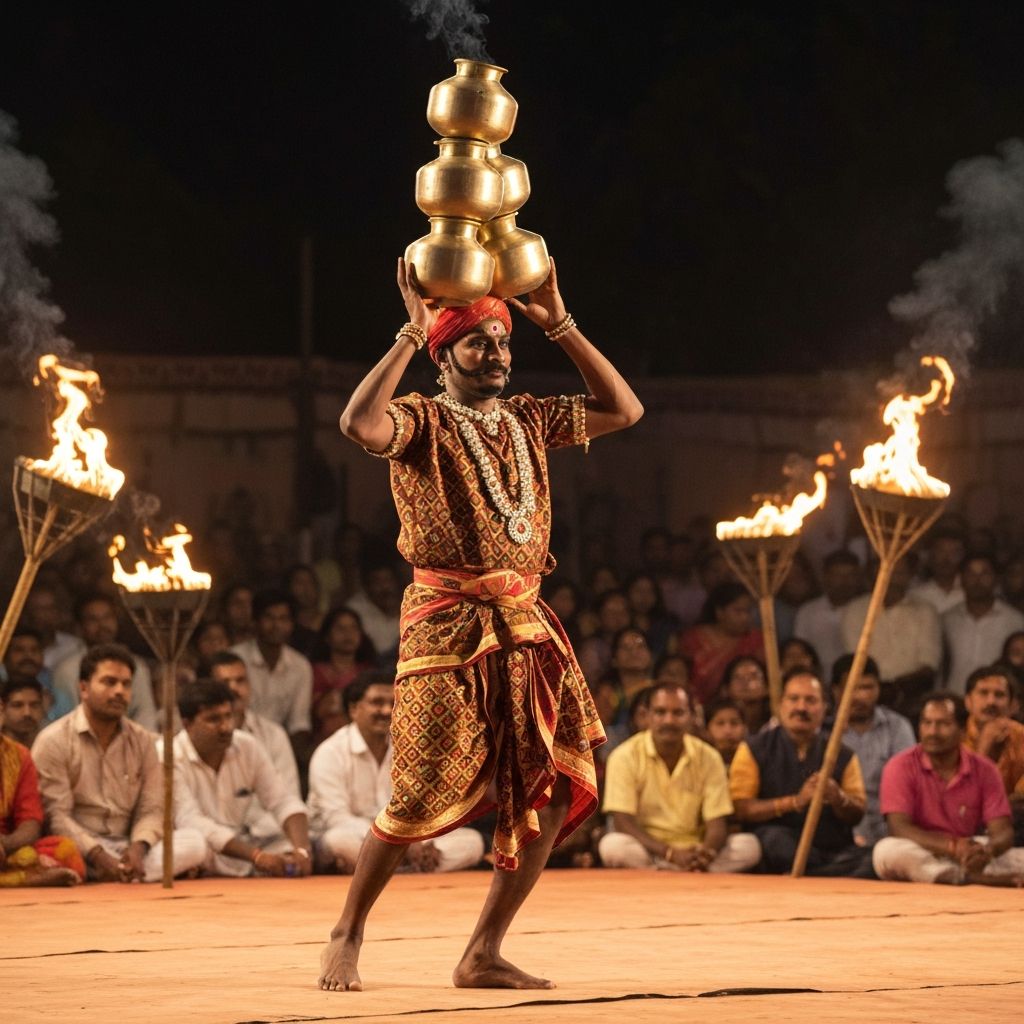
Bhavai
Gujarat's acrobatic folk drama tradition blending theatre, dance, and spectacular balancing acts.
Origin
Gujarat
Founded
14th Century
Founder
Asait Thakar
Deity
Amba Mata
Bhavai is Gujarat's distinctive folk theatre form, traditionally attributed to Asait Thakar, a Brahmin who is said to have founded the art in the 14th century. The name comes from "Bhav" meaning emotion or universe, reflecting the art form's ability to encompass all human emotions and social realities.
What makes Bhavai unique is its combination of dramatic performance with spectacular acrobatics — performers balance multiple brass pots on their heads or dance on the edge of brass plates while enacting social dramas. Each performance is dedicated to goddess Amba and begins with her invocation.
Key Components of Bhavai
Acrobatic Acts
Spectacular balancing of pots and fire while performing
Veshas (Episodes)
Series of short dramatic sketches performed sequentially
Social Themes
Commentary on caste, gender, and social inequality
Devotional Songs
Amba Mata worship integrated into performances
Distinctive Features
Performed by Thakar and Targala communities
Open-air nighttime performances
Acrobatics with fire and brass pots
Strong element of social criticism
Devotion to goddess Amba
Traditional all-night performances