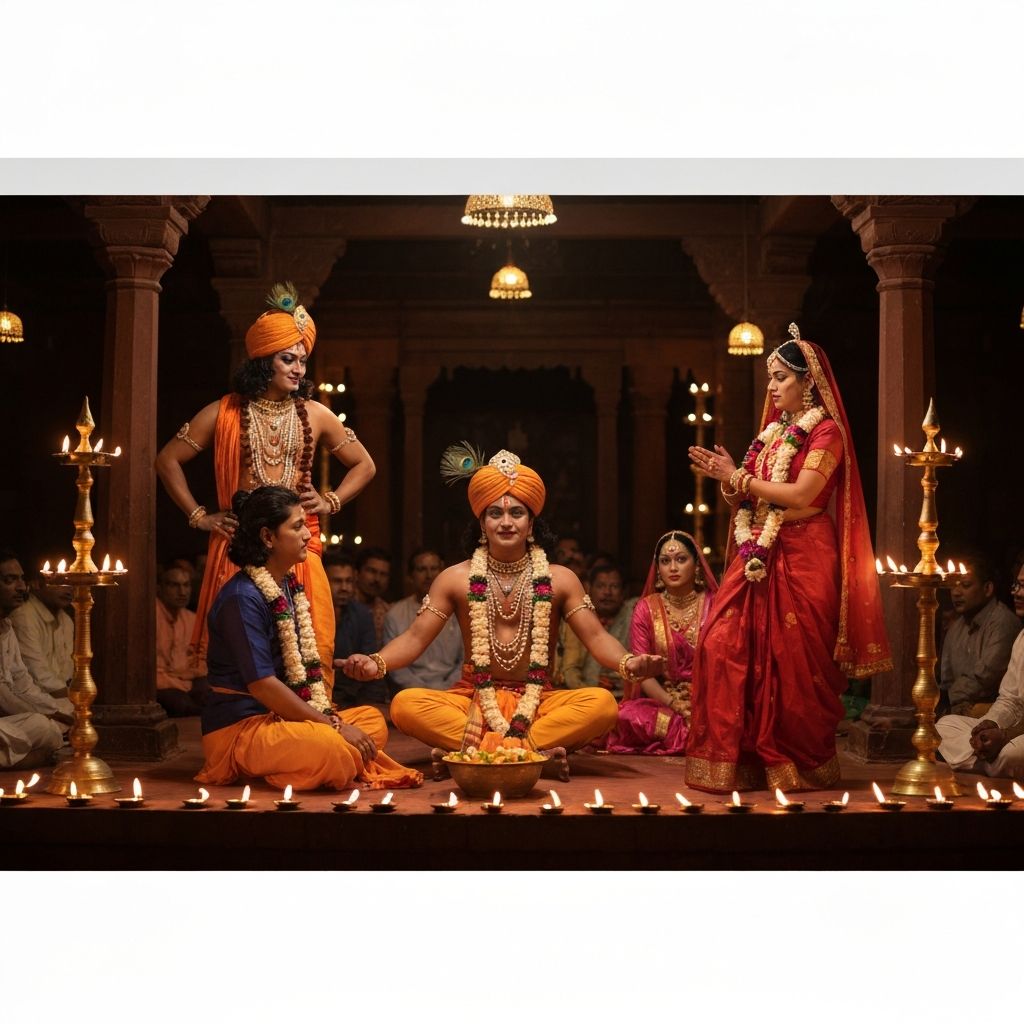
Ankiya Bhaona
The sacred one-act plays of Assam, composed by Sankaradeva, blending devotion, drama, music and dance in the heart of Vaishnava monasteries.
Origin
Assam
Founded
15th-16th Century
Creator
Sankaradeva
Tradition
Vaishnava
Ankiya Bhaona (literally "one-act play") is a unique form of devotional theatre created by the great Assamese saint-poet Sankaradeva in the 15th-16th century. These sacred dramas are performed in the namghars (prayer halls) of Assamese sattras (Vaishnava monasteries) and form an integral part of the Ekasarana Dharma tradition.
Unlike conventional theatre, Ankiya Bhaona is a spiritual experience that brings together music, dance, dialogue, and elaborate costumes to narrate episodes from Krishna's life and the Bhagavata Purana. The performances are designed to inspire devotion (bhakti) in both performers and audience, transforming the namghar into a sacred space where the divine stories come alive.
Distinctive Features
One-Act Structure
Complete plays performed in a single act with continuous narrative
Devotional Themes
Stories from Krishna's life, Bhagavata Purana, and Vaishnava tradition
Sattra Performance
Traditionally performed in Assamese monasteries (sattras)
Musical Integration
Borgeet songs and traditional instruments like khol and taal
Key Elements
Famous Ankiya Naats by Sankaradeva
- Patni Prasad — The first Ankiya Naat, depicting Krishna's grace to the wives of Brahmins
- Kaliya Daman — Krishna's subduing of the serpent Kaliya
- Keli Gopal — The playful pastimes of child Krishna
- Rukmini Haran — Krishna's elopement with princess Rukmini